
Depth vs Breadth: Comparing Apple and Xiaomi ecosystems
Two ecosystem philosophies: one designed to go deeper, the other to go wider.

What is an ecosystem?
Let me clear a misconception here, an ecosystem is not just a bunch of products from the same company, the features between the said products is what makes it an ecosystem.
The value of the ecosystem for the user emerges not from the devices but from the connections between them instead.
Why ecosystems exist at all
Ecosystems of products were created by companies to lock their users to themselves so they keep buying their products and not switch to competitors.
Apple has done this by developing software features that only work between their own products like Airdrop, iMessage, universal control, and many more.
Companies like Xiaomi have also come out with their equivalents of the features of the Apple ecosystem.
Why compare Xiaomi and Apple?
I am picking Xiaomi ecosystem to compare with Apple ecosystem as no other company has as diverse set of products as Xiaomi. With not just having direct competition to Apple products like the iPhone, the iPad or the Mac but also entering markets like the Auto industry with the Su7, and also having a large set of IOT products like robotic floor cleaners, fridges, air conditioners and more.
There are two fundamentally different philosophies
Apple —> Depth
Xiaomi —> Breadth
Lets dive in!
Apple’s ecosystem: Depth
As I show in this diagram here, their ecosystem is very connection dense
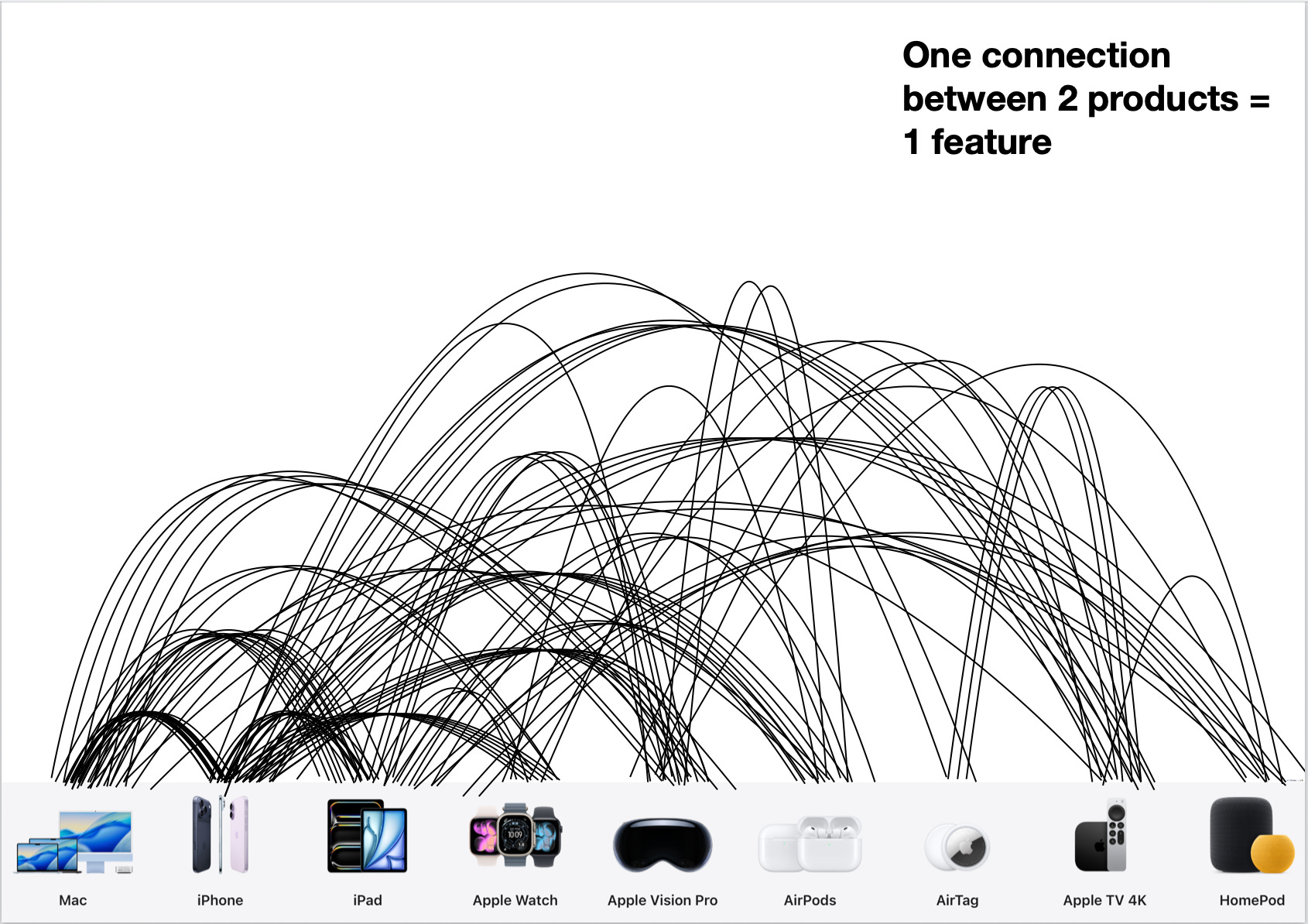
Here one line between 2 products represents 1 ecosystem feature, some products like iPhone-Mac have as much as 18 connections which is insane
Apple ecosystem has:
Many cross product features- All major product categories have a connections with all the smaller product categories like Apple TV, AirPods and HomePod.
Repeated reinforcement across devices- Every major product category has atleast 5 connections constructing a tight mesh.
Each additional Apple device doesn’t just add value, it multiplies it
Xiaomi’s ecosystem: Breadth
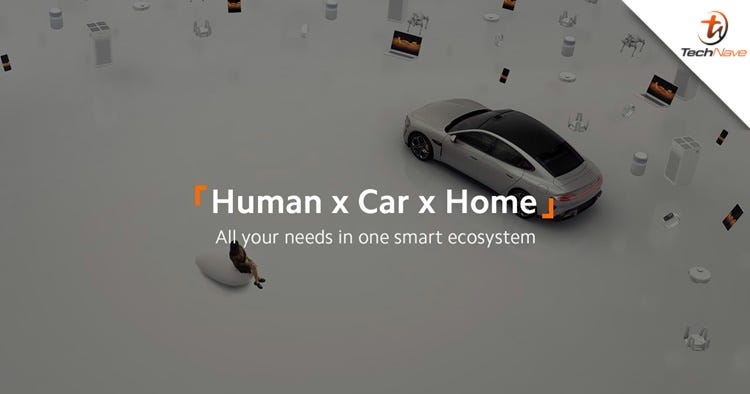
Xiaomi makes a wide range of products from Smartphones, tablets Laptops to Air purfiers, Vacuum cleaners and Robots to Electric scooters and Electric vehicles. Their strategy is Human x Car x Home aiming to integrate the products that live there in a cohesive ecosystem.
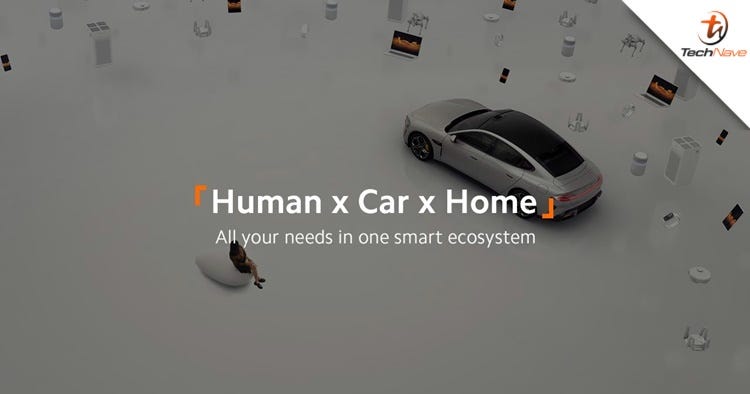
Their portfolio is very diverse, thus their ecosystem has a lot of breadth, but less depth as an example Xiaomi phone and Laptop only has 8 features between them but the Apple equivalent has 18.
Xiaomi’s ecosystem doesn’t try to interlock everything. It tries to exist everywhere.
There are many advantages to scale
Price accessibility: Xiaomi can offer products at a much lower price point, which means the barrier to entry to the ecosystem for a consumer is much lower.
Lifestyle saturation: The Xiaomi ecosystem is not just limited to consumer tech, its your car, your scooter, your air purfier.
By having less depth Xiaomi ecosystem is not weaker, its just optimized differently.
Depth vs Breadth is not good vs bad
Apple wins when:
• User values frictionless continuity
• Fewer devices, higher usage
Xiaomi wins when:
• User values flexibility
• Many devices, varied budgets
The best way to explain it is like this, Apple ecosystem is like a narrow but tall building, Xiaomi ecosystem is a much wider building with a bigger base but has a lot less height. But for tall buildings to be constructed a big base is important for its structural integrity. As Xiaomi enters more product categories, and develops more features on its existing portfolio, Xiaomi’s building will stand much taller than Apple and their ecosystem will be even harder to get out off
Conclusion: Two ecosystems, two bets

Apple bets on compounding connections
Xiaomi bets on expanding presence
The real question isn’t which ecosystem is better, it’s which philosophy will age better as technology disappears into daily life.